




Gaucho Ninja's size guide
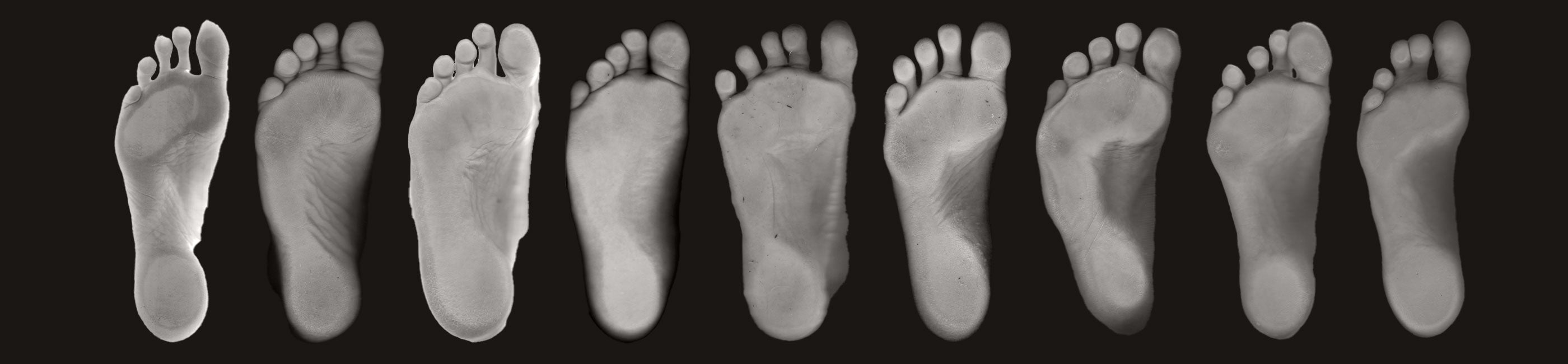
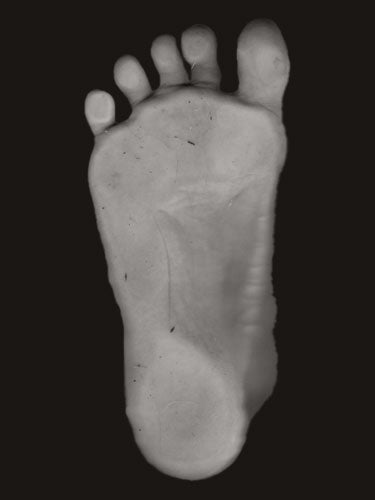


taken once, properly.
Our boots are built on three lasts, each cut to a different width and volume.
Give us the shape of your foot in millimetres and we will tell you which one it belongs on. It takes about five minutes and a piece of paper.
Before you start
- Measure in the evening. Feet swell through the day. A boot fitted to a morning foot can be tight by six o'clock.
- Stand up, weight on both feet. A loaded foot is longer and wider than an unloaded one. Don't lean onto the foot you are measuring.
- Measure both feet. Almost nobody has a matching pair. Take all three measurements on each foot, then work from the larger figure in each.
- Measure without socks. Socks add length and width, and not by the same amount — a thick pair can cost you a size. Measure the foot itself and let us handle the rest.
- Write it down as you go. Millimetres, not centimetres — the difference between two sizes is under seven millimetres.

A | Length
Stand with your heel flat against a wall. Have someone mark the floor at the very end of your longest toe, then measure from the wall to the mark.
Your longest toe is not always your big toe. Roughly one person in four has a longer second toe. Measure to whichever one reaches furthest — this is the single most common way people end up a size short.
Slide a book or a box against your toe so it sits square to the floor, and mark where its edge lands. Reading a tape at the toe means guessing a right angle, and the guess is usually short.

B | Width
Find the two knuckles at the base of your big toe and your little toe. The widest part of your foot runs between them.
Stand with the outside edge of your foot flat against a wall, then measure straight across to the knuckle at the base of your big toe. Straight across, not on the diagonal.
Measure to the joint, not to the tip of your big toe. On a splayed foot the big toe usually sits further out than the joint behind it — measuring to the toe reads wide and can push you onto the wrong last.
Stay standing throughout. Sitting down can cost you four or five millimetres, which is most of a width.

BG | Ball Girth
The distance right around your foot, passing over the same two knuckles you just measured between. This is what tells us the volume of your foot, and it is the measurement most brands ignore.
Use a tailor's tape, not a steel one, and make sure it doesn't stretch. Bring it round until it makes contact and stop there.
Pull it tight and you will record a foot you don't have. Light contact only — the tape should sit against the skin without pressing into it.
Three lasts
Find your size and last
Measure barefoot, standing, weight on both feet, heel against a wall. Measure in the evening — feet run larger by the end of the day. Feet differ; enter the longer one.
Every figure is a last measurement — the form the boot is built on — and equals the maximum internal dimension when new. Vegetable-tanned leather gives with wear. A starting point, not a rule.

Every brand has it's own shoe last
What makes Gaucho Ninja unique
No two feet are the same shape. Gaucho Ninja is built on three lasts, and what separates them is volume, not width alone — a foot is three-dimensional, and ball girth matters as much as ball width.
Converting that to UK and US sizes is imprecise by nature.
Those systems grade at different intervals to ours, so a single UK size can span two of ours.
The chart below shows where they fall.
Use it as a guide, and use 'Find your size and last' for an exact size.